 Euro
Euro
Idrija Lace: A Story of History, Tradition, and Where to Experience It Today
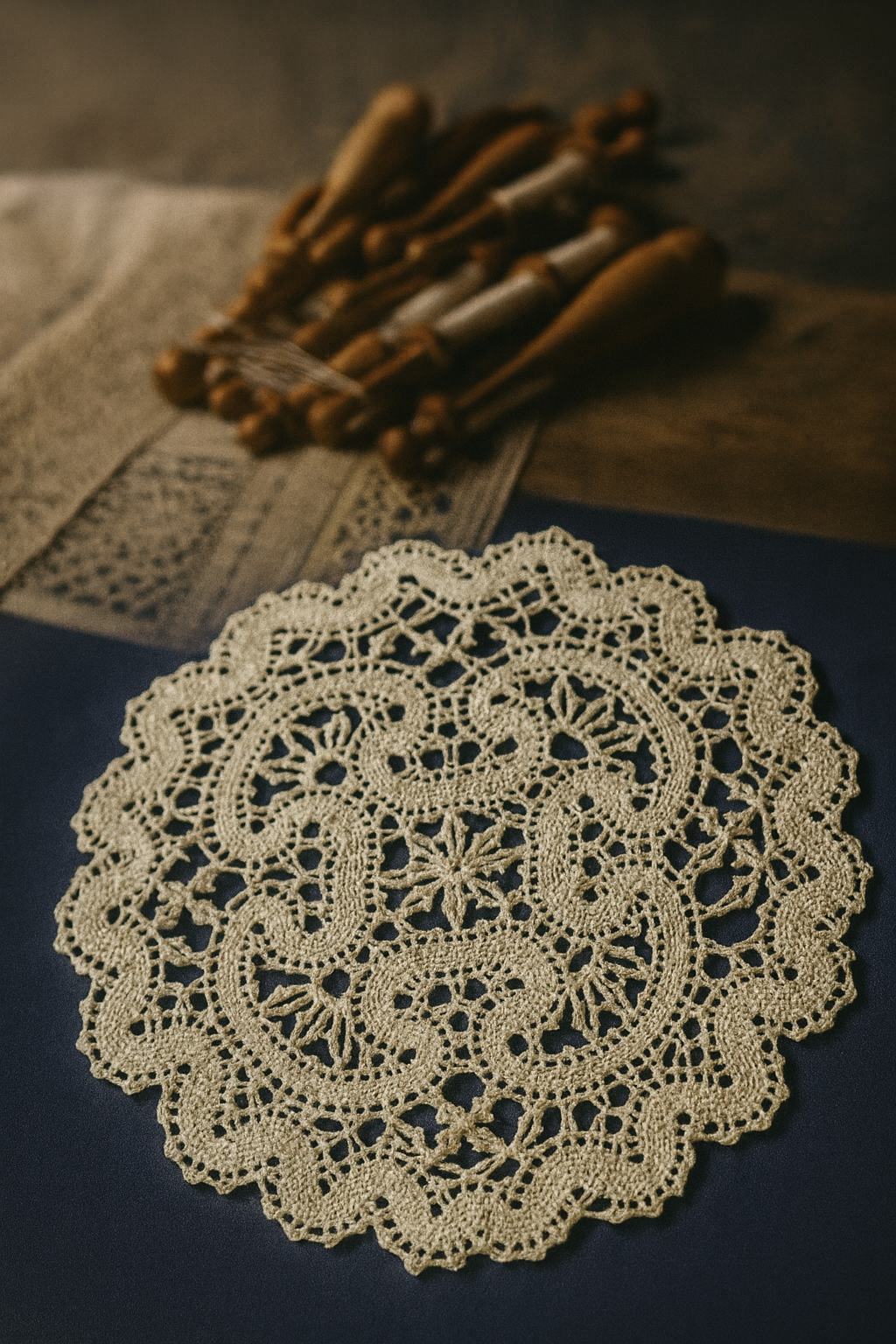
If you wander through the quiet streets of Idrija on an early morning, you may hear a soft, rhythmic tapping echoing from an open window. It is not the sound of machinery or footsteps, but the gentle clicking of wooden bobbins — the same sound that has filled this town for more than three centuries. This delicate music belongs to the lace-makers of Idrija, whose hands have shaped one of Slovenia’s most cherished treasures: Idrija lace.
The story of Idrija lace is deeply woven into the identity of the town itself. Idrija rose to fame as the home of one of the world’s largest mercury mines, but while the men worked deep underground, the women created a world of their own above it. Lace-making arrived in the late 17th century, carried by women who followed miners and settled in this rugged valley. What began as a quiet craft practiced in wooden kitchens soon grew into a symbol of beauty and resilience. With each crossing of thread, a new pattern appeared — delicate, intricate, and unmistakably theirs.
Generations of women learned the art the same way: by watching the hands of their mothers and grandmothers. You can almost imagine a scene from centuries past — a young girl sitting beside an older woman, fascinated as the bobbins dance between her fingers. The patterns seem to bloom from nothing, like frost on a winter window, and before she knows it, the girl’s own hands begin to imitate the movements. In Idrija, lace was more than a hobby. It was a way for women to support their families, express creativity, and preserve something uniquely theirs. Every piece carried a memory — a wedding, a celebration, a gift of love — stitched into the thread itself.
As lace-making grew, so did Idrija’s pride in it. In 1876, the Idrija Lace School opened, and it remains alive to this day. Walking inside feels like stepping into another era. The air is filled with the soft percussion of bobbins, and around the room, girls and women work patiently over lace pillows, guiding delicate threads into elegant shapes. Some create traditional motifs that have existed for hundreds of years; others invent modern designs that bring the craft into the present. Whether old or new, each piece carries the same heart: dedication, patience, and a deep sense of heritage.
Visitors to Idrija can experience this living tradition in several beautiful ways. The town museum, housed in the medieval Gewerkenegg Castle, tells the story of lace-makers and displays masterpieces created across centuries. The Lace School offers demonstrations where you can watch the magic unfold right in front of you — or even try bobbin lace yourself. In small artisan shops, local women still sell their handmade lace, each piece a quiet echo of countless hours of work. And once a year, during the Idrija Lace Festival, the entire town becomes a celebration of creativity: lace exhibitions, workshops, music, and the joyful gathering of lace-makers from all over the world.
Though Idrija lace is centuries old, it is far from a relic of the past. Today, designers incorporate lace patterns into modern fashion, jewelry, and home décor. Couples choose lace details for weddings, artists reinterpret traditional motifs, and travelers from around the world bring lace home as a precious souvenir. What makes Idrija lace so timeless is not only its beauty, but the story it carries — a story of craftsmanship passed from hand to hand, of women who shaped culture as delicately as they shaped thread.
When you visit Idrija, you don’t just see lace.
You feel it — in the streets, in the history, in the quiet pride of the people who keep this tradition alive.
Our apartment is close to the heart of this heritage. Staying with us means you can easily explore the Lace School, the museum, the artisan boutiques, and the peaceful corners of Idrija where this centuries-old craft still whispers through open windows. Let the story of Idrija lace become part of your own journey, a reminder that the most beautiful things are often created slowly, patiently, and with love.